
Biomechanics of Inversions: Safe Entry and Exit Techniques
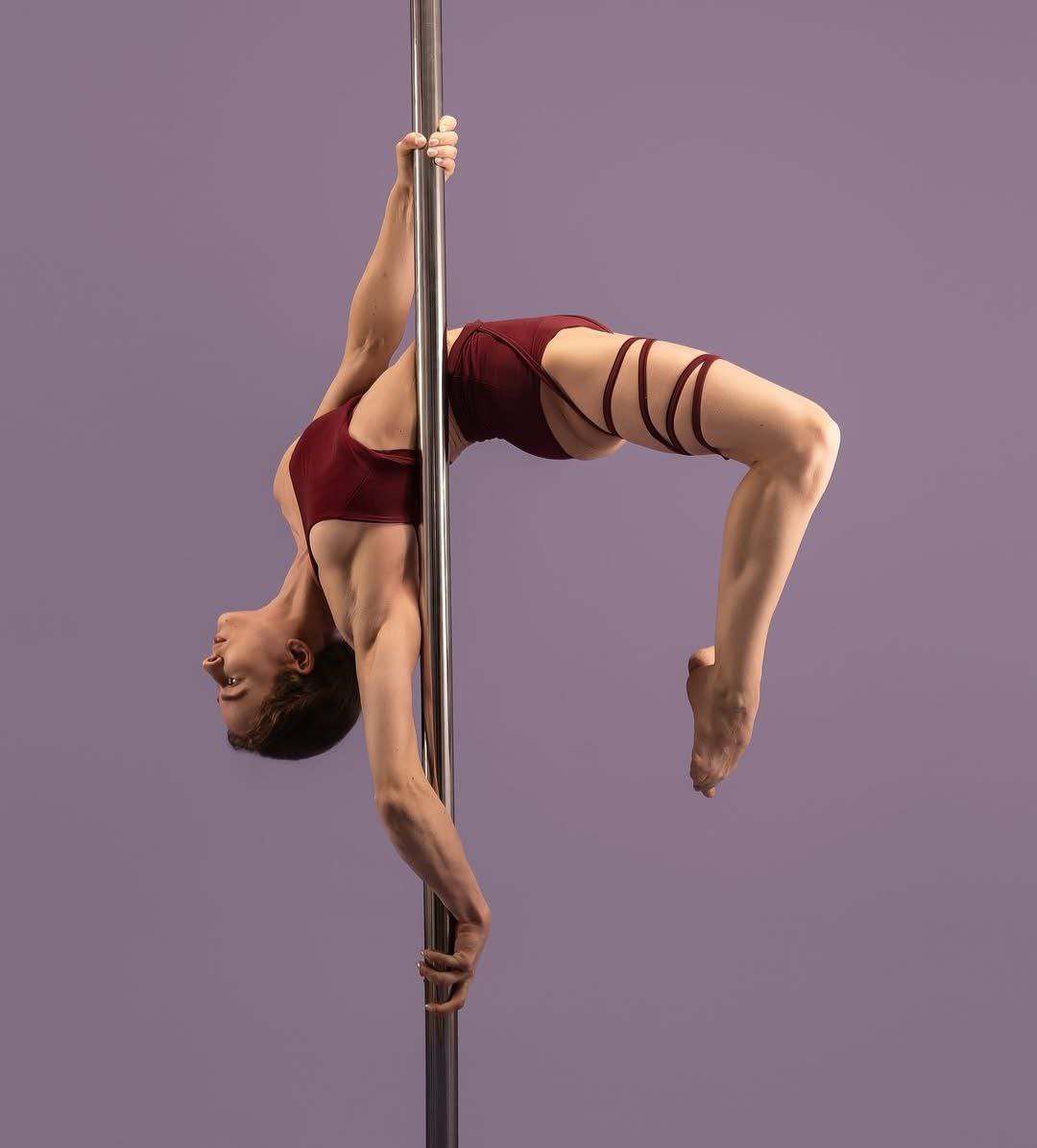
Pole inversions are among the most impressive and technically demanding movements in pole training. They require a precise combination of strength, coordination, timing, and spatial awareness. From a biomechanical perspective, every inversion is a controlled shift of the body’s center of mass around a fixed vertical axis, the pole.
The study of the biomechanics of pole tricks helps dancers understand how forces travel through the body during inversion movements. This includes how joints stabilize, how muscles generate torque, and how grip strength interacts with friction. When executed correctly, inversions become efficient and fluid rather than forceful or risky.
Understanding these principles is essential for both beginners and advanced athletes. Without biomechanical awareness, dancers often rely on momentum instead of controlled engagement, increasing the risk of strain or injury. A structured approach ensures longevity in training and consistent progress in skill development.
Core Biomechanics of Inversions
Every inversion begins with force generation from the lower body and core engagement that initiates upward lift. The body must overcome gravity while maintaining alignment with the pole. This requires a coordinated chain reaction from the feet through the hips and into the torso.
When analyzing the biomechanics of pole tricks, one of the most important factors is load distribution. The upper body, particularly the shoulders and forearms, absorbs significant load during entry. At the same time, the core stabilizes the pelvis to prevent uncontrolled swinging or arching. Professional gear, such as pieces from the okto collection, is designed to provide the necessary support and compression for these high-tension movements.
Another essential element is rotational control. During inversion, the body rotates around the pole while maintaining a stable grip point. This rotation is not passive; it is actively controlled through shoulder engagement and abdominal tension. Poor control can lead to excessive spinal compression or inefficient movement patterns.
Finally, proprioception plays a key role. The dancer must constantly adjust body positioning based on tactile feedback from the pole and visual awareness of spatial orientation. This neurological integration allows smoother transitions and safer execution.
Safe Entry Techniques for Pole Inversions
Mastering entry mechanics is the foundation of all inversion skills. A proper setup ensures that force is distributed correctly before the body leaves the ground. This is where alignment, grip placement, and preparatory engagement become critical.
The safe invert pole dance approach begins with grounding. Feet must be firmly planted, with weight evenly distributed before initiating lift. The core should be pre-activated to avoid relying solely on momentum. This reduces stress on the lumbar spine and shoulders during takeoff. To ensure maximum skin-to-pole contact and stability during this phase, choosing the right shorts is essential.
Hand placement is equally important. The top hand stabilizes and controls vertical alignment, while the lower hand assists with pulling power and balance. The timing between push and pull forces determines whether the inversion will be smooth or unstable.
In addition, breath control supports movement efficiency. Inhaling during preparation and exhaling during lift improves core activation and reduces unnecessary tension. Many beginners underestimate this aspect, yet it significantly improves consistency in pole inversions technique execution.
Finally, the entry phase should prioritize control over speed. Fast entries may look impressive, but they often sacrifice structural integrity. A controlled lift ensures that joints remain aligned and that the center of mass moves predictably around the pole.
Exit Mechanics and Controlled Descent
Exiting an inversion is just as important as entering it. Many injuries occur not during the lift but during uncontrolled descent or transition out of the movement. Proper exit mechanics ensure safe reorientation of the body to an upright position.
A controlled exit requires gradual reduction of core tension while maintaining grip stability. The dancer must reverse the biomechanical chain used in entry, slowly lowering the hips and re-centering the body beneath the shoulders. Wearing reliable tops ensures that your chest and shoulders remain supported throughout the entire descent.
In the safe invert pole dance framework, exits are treated as an extension of the movement rather than a separate phase. This mindset helps maintain fluidity and prevents abrupt drops or collapses that can strain the wrists or spine.
Another key aspect is directional awareness. The dancer must understand where the body’s center of mass is at all times. Small adjustments in shoulder angle or hip position can significantly change the trajectory of descent.
Finally, landing mechanics are essential. Whether returning to the floor or transitioning into another trick, the knees should absorb impact softly. This reduces joint stress and ensures continuity in flow-based routines.
Common Biomechanical Mistakes and Injury Risks
One of the most common mistakes in inversion training is relying too heavily on momentum rather than muscular engagement. While momentum can assist beginners, it often leads to loss of control and increased risk of shoulder or lower back strain.
Another frequent issue is improper shoulder alignment. When shoulders collapse or shrug excessively, load distribution becomes uneven, increasing the risk of impingement. Вreathable materials and ergonomic designs, like those found in the mesh line, help dancers maintain focus on their form without overheating.
Core disengagement is another critical error. Without proper abdominal activation, the lumbar spine compensates, often resulting in hyperextension. Over time, this can lead to chronic discomfort or injury.
Grip fatigue also plays a major role in safety. If grip strength is insufficient, dancers may compensate by overusing other muscle groups, disrupting the natural flow of movement. Proper conditioning is essential to support long training sessions.
Finally, rushing progression is a significant risk factor. Advanced inversions require a base of controlled strength and awareness. Skipping foundational pole inversions technique training often leads to instability and inconsistent performance.
Training Strategies and Conditioning for Safer Inversions
Developing strong inversion skills requires targeted conditioning beyond pole practice itself. Strength training for the core, shoulders, and posterior chain directly improves control and reduces injury risk.
Exercises such as hollow body holds, hanging leg raises, and scapular pulls are highly effective for building foundational strength. These movements replicate the demands of inversion mechanics in a controlled environment. Practicing these drills in items from our new collection provides the comfort and flexibility needed for off-pole conditioning.
Flexibility training is also important, but it must be balanced with strength. Excess flexibility without stability can reduce joint control, especially in inverted positions. A combination of active flexibility and strength ensures better movement integrity.
Practicing slow-motion inversions is another highly effective drill. By reducing speed, dancers can analyze every phase of movement, improving awareness of alignment and muscle engagement. This reinforces correct pole inversions technique patterns.
Additionally, progressive overload should be applied carefully. Starting with assisted inversions and gradually reducing support allows the body to adapt safely. This structured approach aligns with long-term injury prevention and skill mastery.
Integrating Biomechanics for Long-Term Progress
Understanding the biomechanics of pole tricks transforms inversions from purely aesthetic movements into highly efficient, controlled athletic skills. When dancers apply biomechanical principles, they reduce injury risk and improve performance consistency.
Safe training methods like safe invert pole dance strategies ensure that both entry and exit phases are controlled and sustainable. This not only enhances technical execution but also supports long-term physical health.
Ultimately, mastering pole inversions technique is not about force or speed—it is about precision, awareness, and intelligent movement. With consistent practice and biomechanical understanding, inversions become a powerful expression of strength and control rather than a risky challenge.
Rate this post