
Coaching Cues That Improve Pole Technique Faster
Mastering pole dance is not just about strength or flexibility—it’s about precision, body awareness, and intelligent coaching. The right verbal cues can dramatically accelerate progress, helping dancers correct mistakes in real time and build efficient movement patterns. Whether you’re a beginner or an advanced pole athlete, understanding and applying targeted coaching cues is one of the fastest ways to refine your skills. If you are looking for fresh gear to match your evolving skills, check out our new collection.
In this article, we’ll break down the most effective strategies and pole dance coaching tips that instructors use to deliver impactful corrections. You’ll also learn how to apply technical corrections pole techniques to improve pole form fast, avoid injuries, and perform with greater confidence.
Why Coaching Cues Matter More Than Repetition?
Many pole dancers believe that repeating a move over and over will eventually lead to improvement. While repetition is important, it’s only effective when the movement pattern is correct. Without proper guidance, repetition can actually reinforce bad habits, making them harder to fix later.
Coaching cues act as shortcuts for the brain. Instead of overthinking every detail of a move, a well-crafted cue simplifies complex mechanics into actionable instructions. For example, instead of saying “engage your lat muscles and stabilize your scapula,” a coach might say “pull your shoulders down and away from your ears.” This makes the correction immediate and easier to implement.
Another key advantage is speed. With the right pole dance coaching tips, dancers can identify mistakes instantly and adjust on the fly. This reduces frustration and accelerates learning, especially for technically demanding tricks like inversions, spins, and transitions.
The Science Behind Effective Coaching Cues
Effective coaching cues are rooted in motor learning principles. The brain learns movement best when instructions are simple, clear, and focused on outcomes rather than internal mechanics. This is why external cues—like “push the pole away”—often work better than internal ones like “activate your triceps.”
One important concept is “chunking.” Instead of overwhelming the dancer with multiple corrections, good coaches break movements into smaller parts. Each cue targets one specific action, allowing the dancer to build coordination step by step. This is particularly useful when applying technical corrections pole training to complex sequences. In terms of specialized gear that supports this technical precision, the Okto collection is designed to move with the athlete’s body.
Timing also plays a critical role. The best cues are delivered at the right moment—either just before execution or during the movement. This helps the brain associate the correction with the physical sensation, reinforcing proper technique much faster.
Foundational Cues for Grip and Upper Body Control
Grip and upper body engagement are the foundation of almost every pole move. Without proper activation, even simple tricks can feel unstable or unsafe. One of the most effective cues here is “pull, don’t hang.” This reminds dancers to actively engage their muscles instead of relying on passive grip strength.
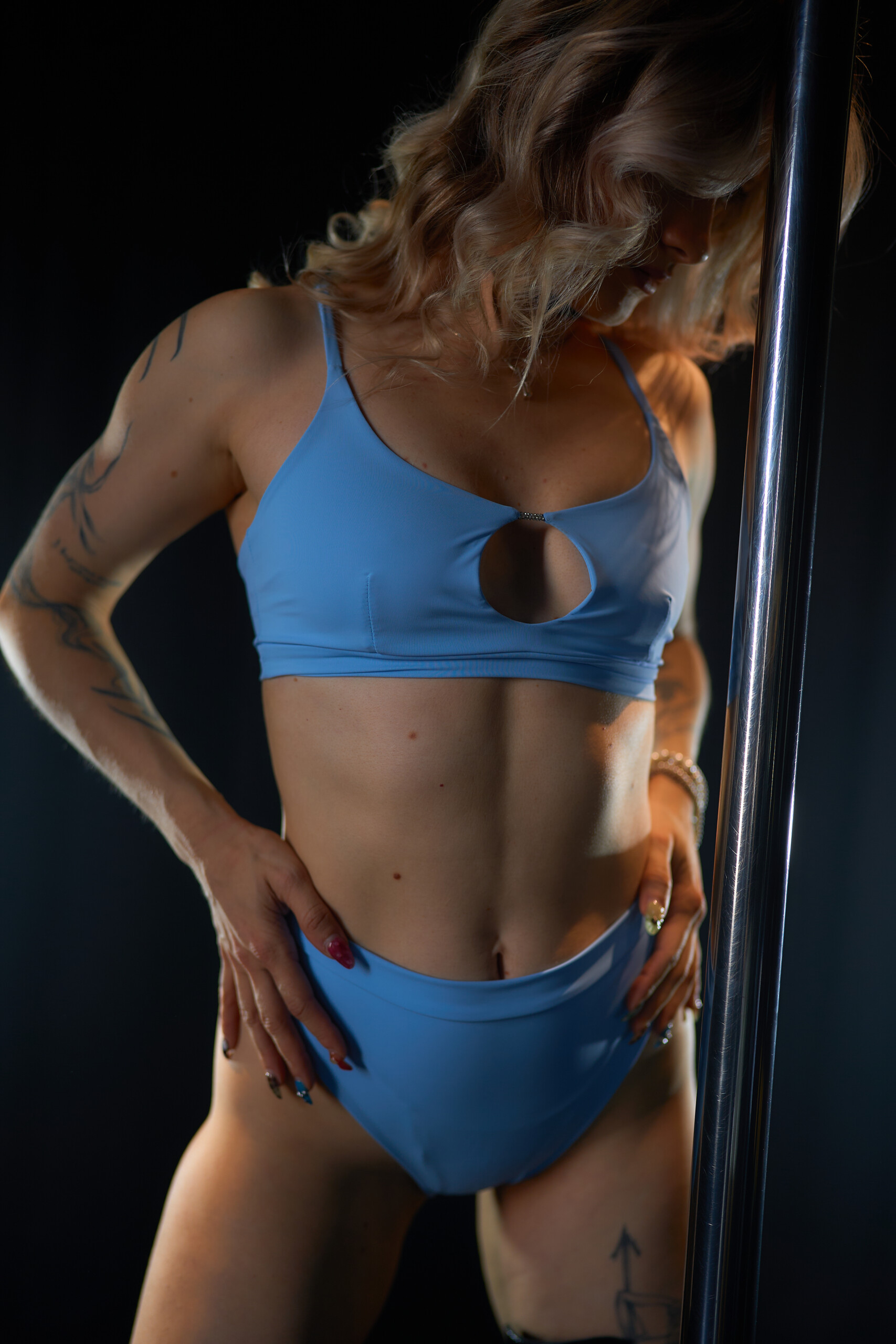
Another powerful cue is “shoulders down, chest proud.” This helps prevent shrugging, which can lead to fatigue and poor alignment. Keeping the shoulders depressed and the chest open improves both aesthetics and control, especially during spins and climbs. To ensure maximum range of motion during these upper body engagements, professional tops provide the necessary support and freedom of movement.
To improve pole form fast, it’s essential to focus on hand placement as well. A simple cue like “wrap, don’t press” encourages a more secure grip and reduces unnecessary tension. These small adjustments can significantly enhance stability and efficiency.
Core Engagement: The Hidden Key to Clean Technique
Core engagement is often misunderstood in pole dance. Many dancers think it only matters during advanced tricks, but in reality, it influences every movement. A weak or inactive core leads to sloppy lines, poor balance, and increased strain on the arms.
One of the most effective cues is “zip up your ribs.” This encourages proper alignment by preventing rib flare and promoting a neutral spine. Another useful instruction is “pull your belly button to your spine,” which activates deep core muscles without over-bracing.
When applying technical corrections pole, coaches often use cues like “move from your center.” This shifts the dancer’s focus from limbs to core control, resulting in smoother transitions and better coordination. Over time, this builds a strong foundation that supports more advanced skills.
Lower Body Positioning and Line Control
Beautiful lines are what separate good pole dancers from great ones. However, achieving clean leg positioning requires more than just flexibility—it demands awareness and precision. Coaching cues can make a huge difference here.
A common issue is bent or inactive legs. The cue “reach through your toes” helps create extension and energy throughout the entire leg. Similarly, “squeeze your inner thighs” improves stability and alignment, especially during climbs and sits. Wearing high-quality shorts can help you better visualize these leg lines and monitor your knee extension during practice.
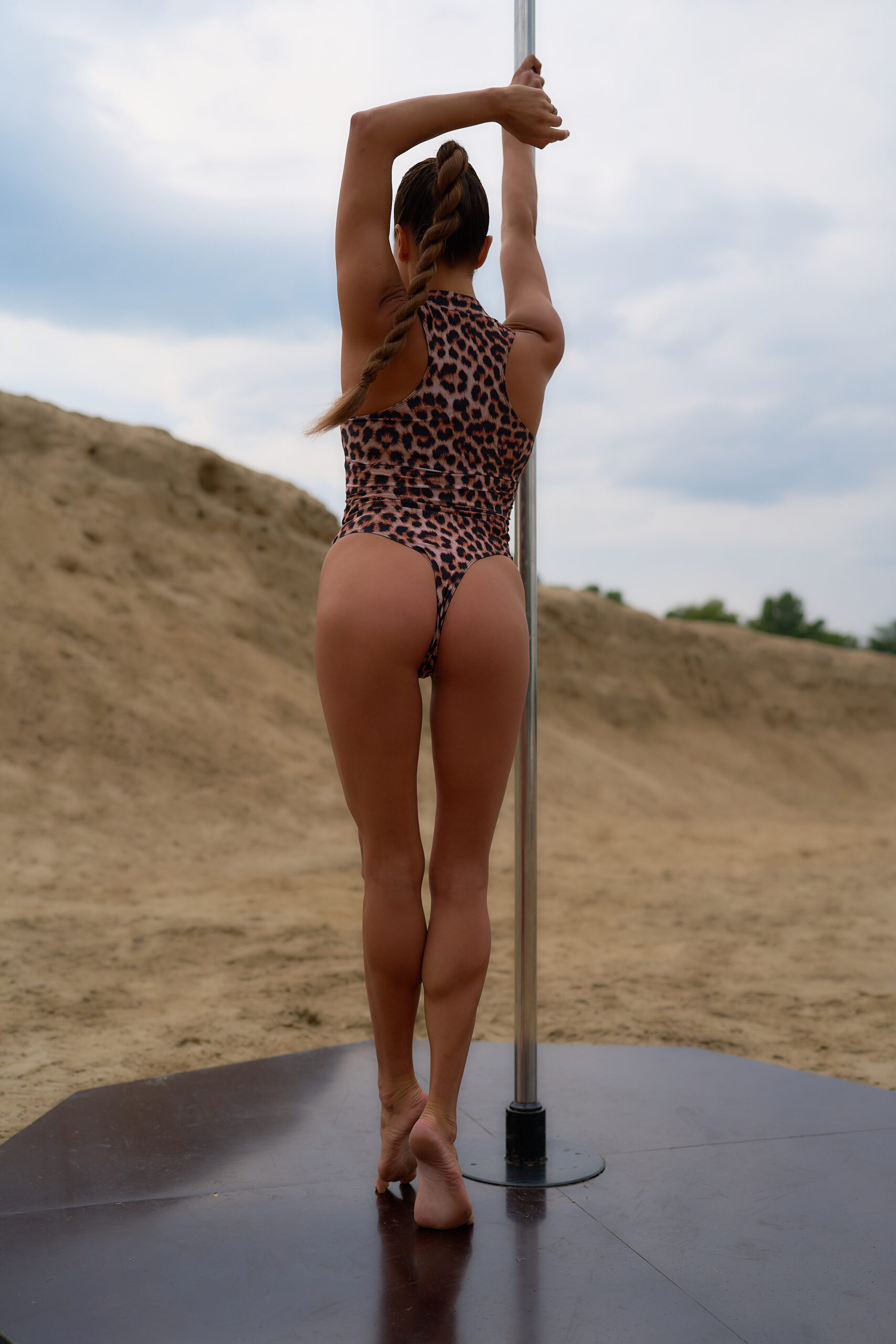
To improve pole form fast, dancers should also focus on hip positioning. A cue like “square your hips” ensures proper alignment and prevents twisting. These subtle adjustments not only enhance aesthetics but also make movements more efficient and controlled. For a look that emphasizes these lines with a touch of elegance, many dancers incorporate mesh elements into their training outfits.
Fixing Common Mistakes with Targeted Cues
Every pole dancer struggles with specific technical issues, whether it’s slipping, losing balance, or struggling with inversions. The key is identifying the root cause and applying the right cue.
For example, if a dancer struggles with climbing, the issue might not be strength but timing. A cue like “push with your legs before you pull” can completely change the movement pattern. This is a perfect example of how pole dance coaching tips can unlock progress instantly.
In inversions, a common mistake is jumping instead of lifting. The cue “hips up, not feet up” redirects focus to the correct movement pathway. This not only improves technique but also reduces the risk of injury.
By consistently applying technical corrections pole, dancers can turn weaknesses into strengths and build a more reliable skill set.
How to Internalize Coaching Cues for Faster Progress?
Hearing a cue once is not enough—you need to internalize it. This means actively thinking about the cue during practice and associating it with the correct physical sensation. Over time, the cue becomes automatic, allowing you to execute movements without conscious effort.
One effective method is visualization. Before attempting a move, mentally rehearse the cue and imagine performing it correctly. This primes the brain and increases the likelihood of success.
Another strategy is repetition with intention. Instead of mindlessly repeating a trick, focus on one cue at a time. This aligns perfectly with pole dance coaching tips that emphasize quality over quantity. By doing this, you can improve pole form fast and make every training session more productive.
The Role of Feedback and Self-Awareness
Feedback is essential for growth, but it doesn’t always have to come from a coach. Video analysis is a powerful tool that allows dancers to observe their own technique and identify areas for improvement. When combined with coaching cues, this creates a feedback loop that accelerates learning.
Self-awareness is equally important. Pay attention to how your body feels during each movement. Are your shoulders tense? Is your core engaged? These internal signals can guide you toward better technique.
Applying technical corrections pole in this way turns practice into a deliberate and focused process. Instead of guessing what’s wrong, you can make precise adjustments and see immediate results.
Conclusion: Train Smarter, Not Just Harder
Improving in pole dance is not about pushing harder—it’s about training smarter. Coaching cues provide a powerful framework for understanding movement, correcting mistakes, and building efficient technique.
By integrating proven pole dance coaching tips into your training, you can identify and fix errors quickly. Using targeted technical corrections pole, you’ll develop cleaner lines, stronger control, and better overall performance. Most importantly, these strategies will help you improve pole form fast without unnecessary frustration or risk.
Consistency, awareness, and the right cues—this is the formula for faster progress and long-term success in pole dance.
Rate this post